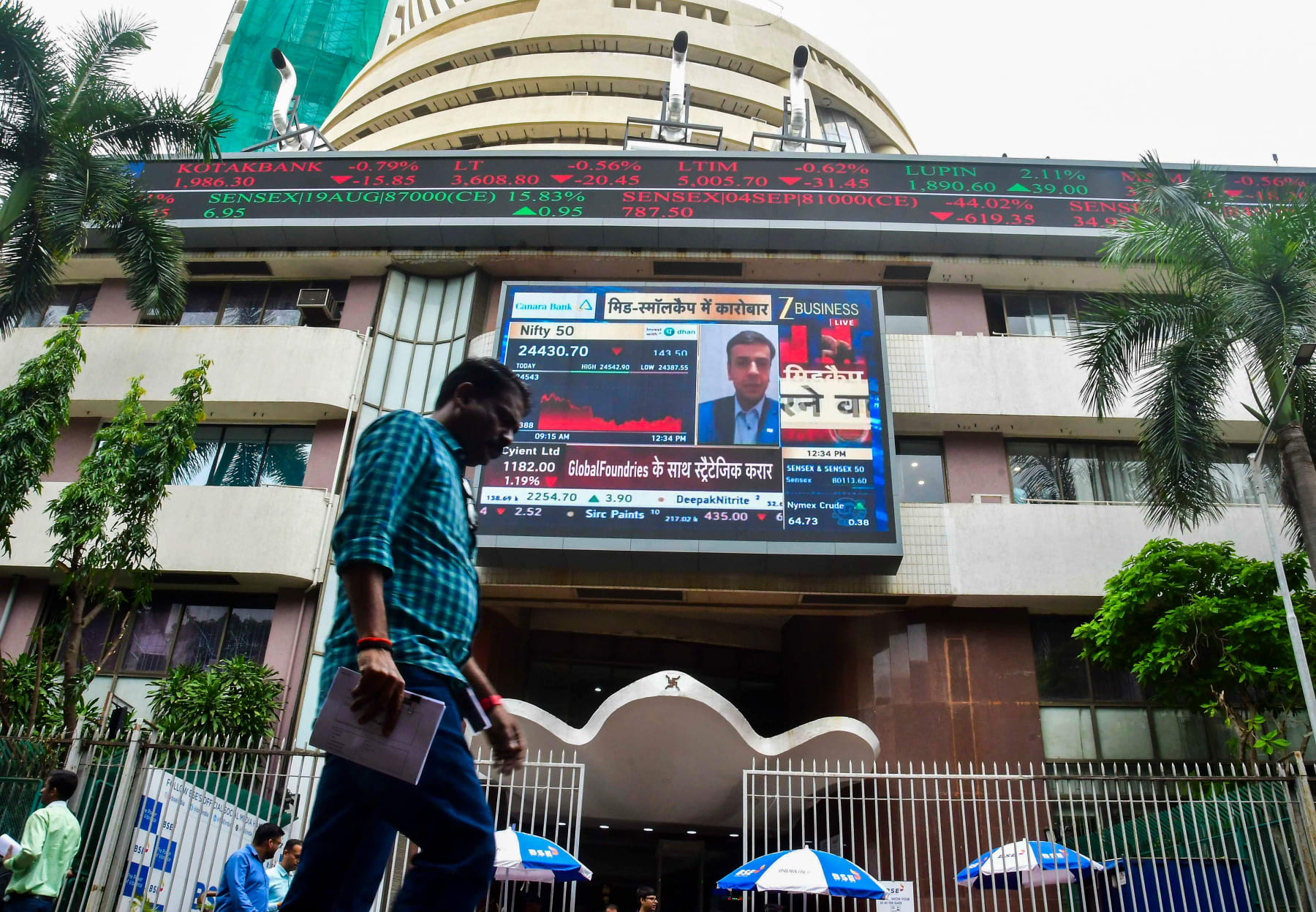
Indian markets are flat, but oil above $100 is changing the risk map underneath
Energy producers can benefit from higher crude even as the broader economy faces pressure through inflation, the rupee and input costs.
THE INDIQA Desk10 Sept 20261 minEconomy
60-Second Summary
Flat benchmark indices can conceal a major macro shock. High oil helps some producers while raising costs, inflation and currency pressure across much of the economy.
UPSC Relevance
PrelimsMedium
MainsGS-III · High
SubjectEconomy
TopicEconomy
Importance★★★★★
Image: Hindustan Times - BSE file photo
Indian benchmark equity indices opened around flat levels on September 10 even as Brent crude remained above $100 a barrel. The muted headline move hides an important sectoral split: upstream oil producers can benefit from higher crude prices while fuel-consuming industries and the wider economy face higher costs.
That divergence explains why a market index can look stable while macroeconomic risk is rising. More expensive oil can hurt airlines, paints, chemicals, logistics and other energy-intensive businesses, while also worsening inflation and external-sector pressure.
For exam and policy analysis, stock-market performance should not be treated as a direct proxy for the economy. Indices reflect the composition and expectations of listed companies, not a complete measure of household welfare, employment or inflation.
Prelims Lens
Prelims Lens
Equity indices are weighted baskets of listed companies.
Higher crude can benefit upstream producers but hurt fuel-intensive industries.
Mains Lens
Mains Lens
Central issue: Energy producers can benefit from higher crude even as the broader economy faces pressure through inflation, the rupee and input costs.
Dimensions: Economy
Sectoral winners and losers from oil shocks
Limits of stock indices as economic indicators
Possible UPSC-style questionWhy can equity-market stability coexist with worsening macroeconomic conditions?