India is backing patient-specific 3D-printed bone grafts as an import-substitution technology
The Technology Development Board is supporting Ceramat's effort to commercialise customised calcium-phosphate grafts made with DLP and extrusion-based 3D printing.
THE INDIQA Desk10 Sept 20263 minScience & Technology
60-Second Summary
The project combines indigenous bioceramics with advanced additive manufacturing, linking medical technology with import substitution and personalised care.
UPSC Relevance
PrelimsHigh
MainsGS-II · GS-III · High
SubjectScience & Technology, Health & Social Issues, Economy
TopicScience & Technology
Importance★★★★☆
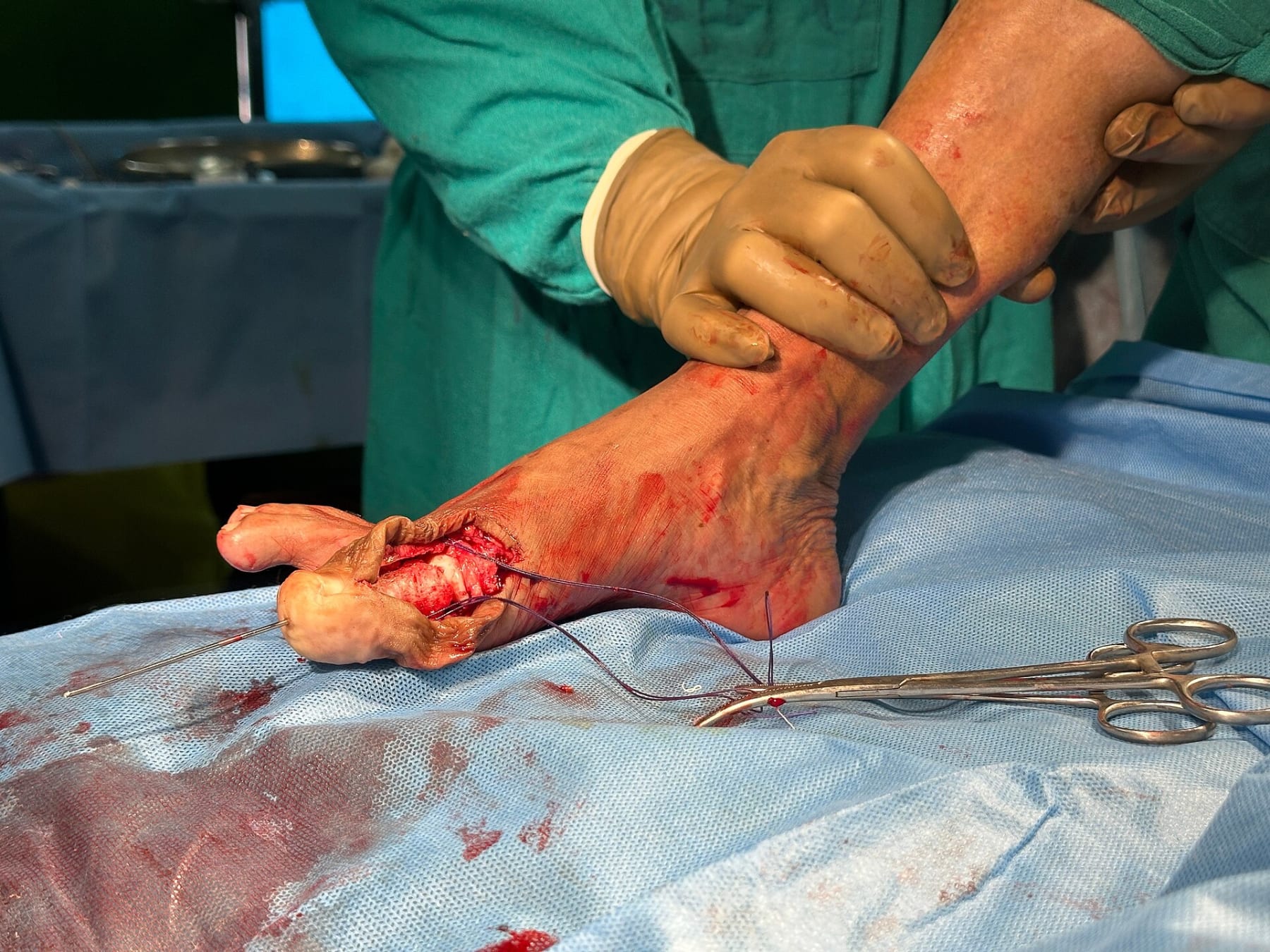
Image: Donvikro / Wikimedia Commons - CC BY-SA 4.0
The Technology Development Board under the Department of Science and Technology has extended financial assistance to Ceramat Private Limited in Palghar, Maharashtra, for commercialisation of standard and patient-specific calcium-phosphate bone grafts. The project will use both Digital Light Processing and extrusion-based 3D-printing techniques.
Materials such as hydroxyapatite and beta-tricalcium phosphate are used in bone-graft applications because their mineral chemistry resembles components of natural bone. Ceramat already makes conventional graft materials; the supported project is intended to add digitally designed, customised structures matched to individual clinical requirements.
The policy angle is import substitution in advanced medical technology. But commercialisation support should not be confused with proof of clinical superiority or nationwide deployment. Regulatory compliance, manufacturing consistency, clinical validation, cost and physician adoption will determine how far an indigenous technology moves from supported project to routine healthcare use.
Prelims Lens
Prelims Lens
Hydroxyapatite and beta-tricalcium phosphate are calcium-phosphate biomaterials used in bone-graft applications.
DLP and material extrusion are different additive-manufacturing techniques.
Watch the trap: Government commercialisation support does not by itself establish clinical superiority or mass deployment.
Mains Lens
Mains Lens
Central issue: TDB-DST is supporting the commercialisation of patient-specific 3D-printed calcium-phosphate bone grafts by an Indian company.
Dimensions: Science & Technology · Health & Social Issues · Economy
Indigenous medical technology and import substitution
Challenges of moving biomedical innovation from manufacturing to validated clinical use
India angle: Reducing dependence on imported high-value medical products is a strategic manufacturing objective, but patient safety remains the central test.
Possible UPSC-style questionWhat policy and regulatory conditions are needed to translate indigenous biomedical innovation into safe, scalable healthcare products?