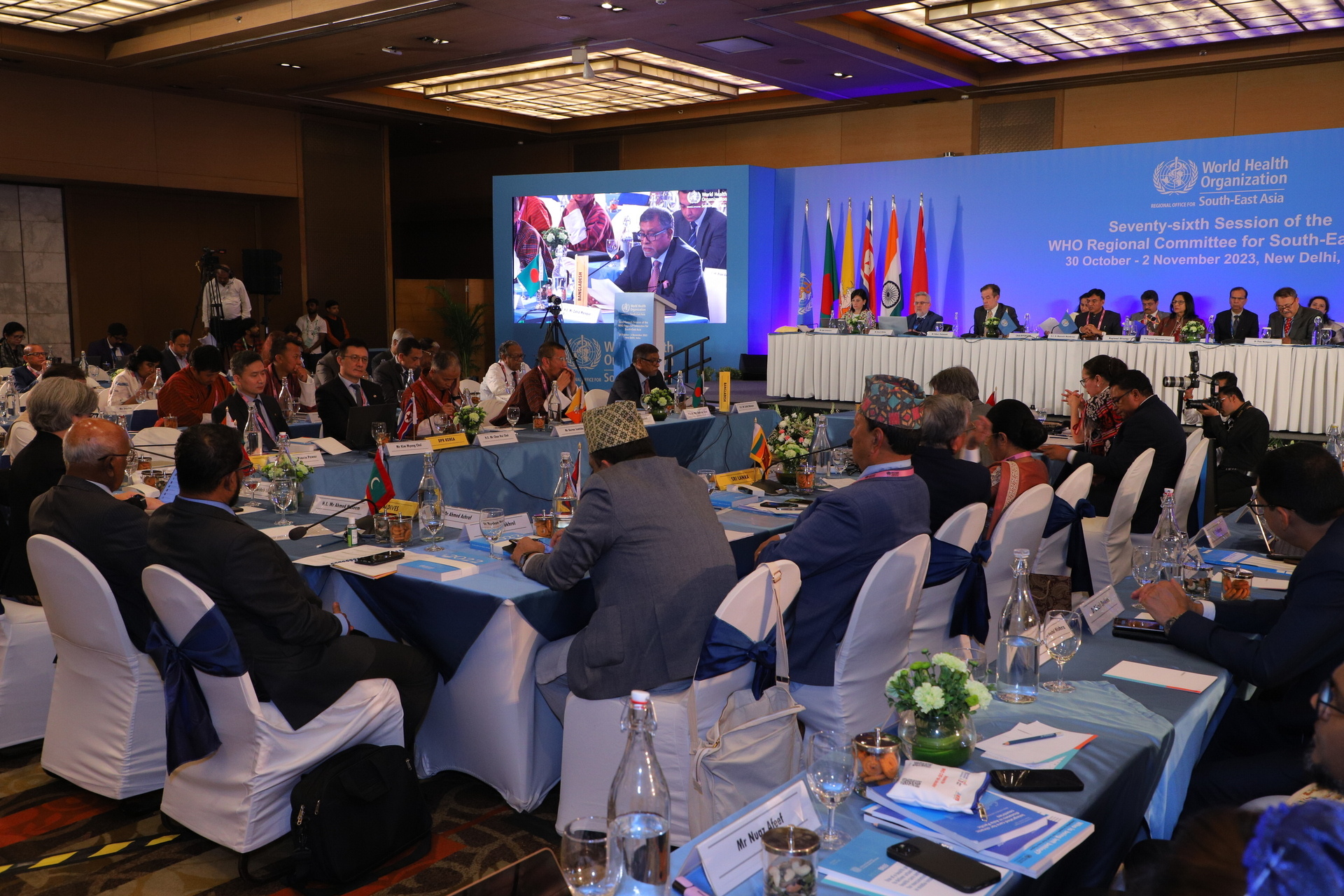
At WHO RC79, health-worker shortages and specialist access took centre stage
India highlighted expansion in medical education as the region adopted the Dili Declaration on equity in specialised care.
THE INDIQA Research Desk9 Sept 20262 minHealth & Social Issues
60-Second Summary
India highlighted expansion in medical education as the region adopted the Dili Declaration on equity in specialised care.
UPSC Relevance
PrelimsMedium
MainsGS-II · High
SubjectHealth & Social Issues, Government Schemes & Reports
TopicHealth workforce and equitable access
Importance★★★★☆
Image: World Health Organization - file photo
At the 79th session of the WHO Regional Committee for South-East Asia, India highlighted the expansion of medical, nursing and allied-health capacity and the challenge of delivering specialised care to rural, tribal and underserved populations. The regional meeting also adopted the Dili Declaration on equity in specialised care.
The policy issue is not only the total number of doctors or seats. Distribution, skill mix, public-sector retention, referral systems and the availability of specialists determine whether capacity translates into access. This makes human resources for health a governance and equity problem as much as an education problem.
Prelims Lens
Prelims Lens
WHO’s South-East Asia Region includes India and several neighbouring countries.
Mains Lens
Mains Lens
Central issue: India highlighted expansion in medical education as the region adopted the Dili Declaration on equity in specialised care.
Dimensions: Health & Social Issues · Government Schemes & Reports
Distribution versus aggregate availability of health workers
Rural and tribal access to specialist care
India angle: India’s central challenge is converting a larger health workforce into geographically equitable services.
Possible UPSC-style questionWhy does expanding medical education not automatically ensure equitable access to healthcare?