Uttarakhand's Form-7 numbers are highly concentrated. That does not by itself prove wrongful deletion
More than 85% of 1,30,382 Form-7 applications came from four plains districts, but an application to delete a name is not the same as a verified deletion.
THE INDIQA Desk10 Sept 20263 minPolity & Governance
60-Second Summary
The geographic concentration deserves scrutiny, but a Form-7 application is only a request or objection and does not itself prove that a voter was deleted improperly.
UPSC Relevance
PrelimsHigh
MainsGS-II · High
SubjectPolity & Governance
TopicPolity & Governance
Importance★★★★★
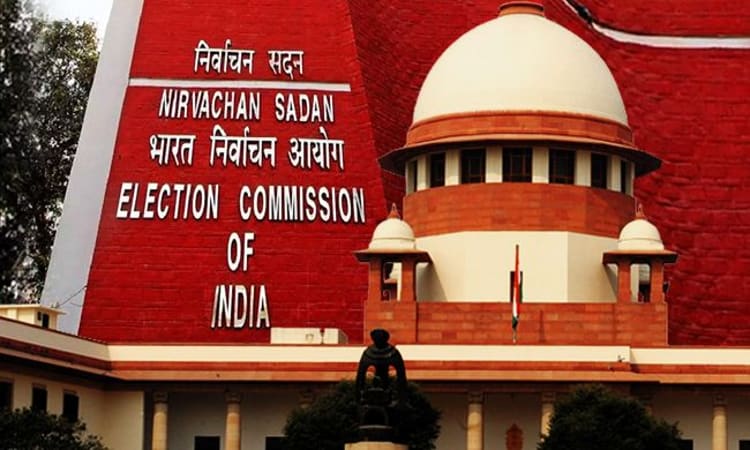
Image: LiveLaw - Election Commission of India file photo
More than 85% of the 1,30,382 Form-7 applications filed during Uttarakhand's Special Intensive Revision claims-and-objections period came from Udham Singh Nagar, Haridwar, Dehradun and Nainital, according to data reported by The Indian Express. The concentration is striking and warrants scrutiny because the four districts contain some of the state's most populous and mobile urban-plains areas.
But the number needs careful interpretation. Form 7 is used to object to an entry or seek deletion from an electoral roll. Filing the form does not automatically remove a voter. Election officials must process the claim and apply the relevant verification procedure, so application counts cannot by themselves establish that wrongful deletions occurred.
The governance issue is therefore twofold: why requests are geographically concentrated, and whether the verification process is transparent enough to protect eligible voters while cleaning inaccurate rolls. For exam purposes, the episode is useful for understanding electoral-roll revision, due process, administrative capacity and the tension between roll integrity and inclusion.
Prelims Lens
Prelims Lens
Form 7 is used for objection to inclusion or for seeking deletion of an entry in the electoral roll.
Claims and objections must be processed before the final roll is published.
Watch the trap: A high number of Form-7 applications is not the same as a high number of confirmed or wrongful deletions.
Mains Lens
Mains Lens
Central issue: More than 85% of Uttarakhand's Form-7 applications during SIR came from four plains districts.
Dimensions: Polity & Governance
Due process in electoral-roll revision
Balancing electoral-roll integrity with universal adult franchise and inclusion
India angle: For India, the larger institutional test is whether large-scale roll revision can be both rigorous and visibly fair.
Possible UPSC-style questionHow should election administration balance accurate electoral rolls with safeguards against exclusion of eligible voters?