
NCAP says 108 of 130 cities improved PM10 levels. What does that actually tell us?
The latest clean-air assessment gives aspirants a current data point, but also a reminder that air-quality policy must be judged beyond a single pollutant.
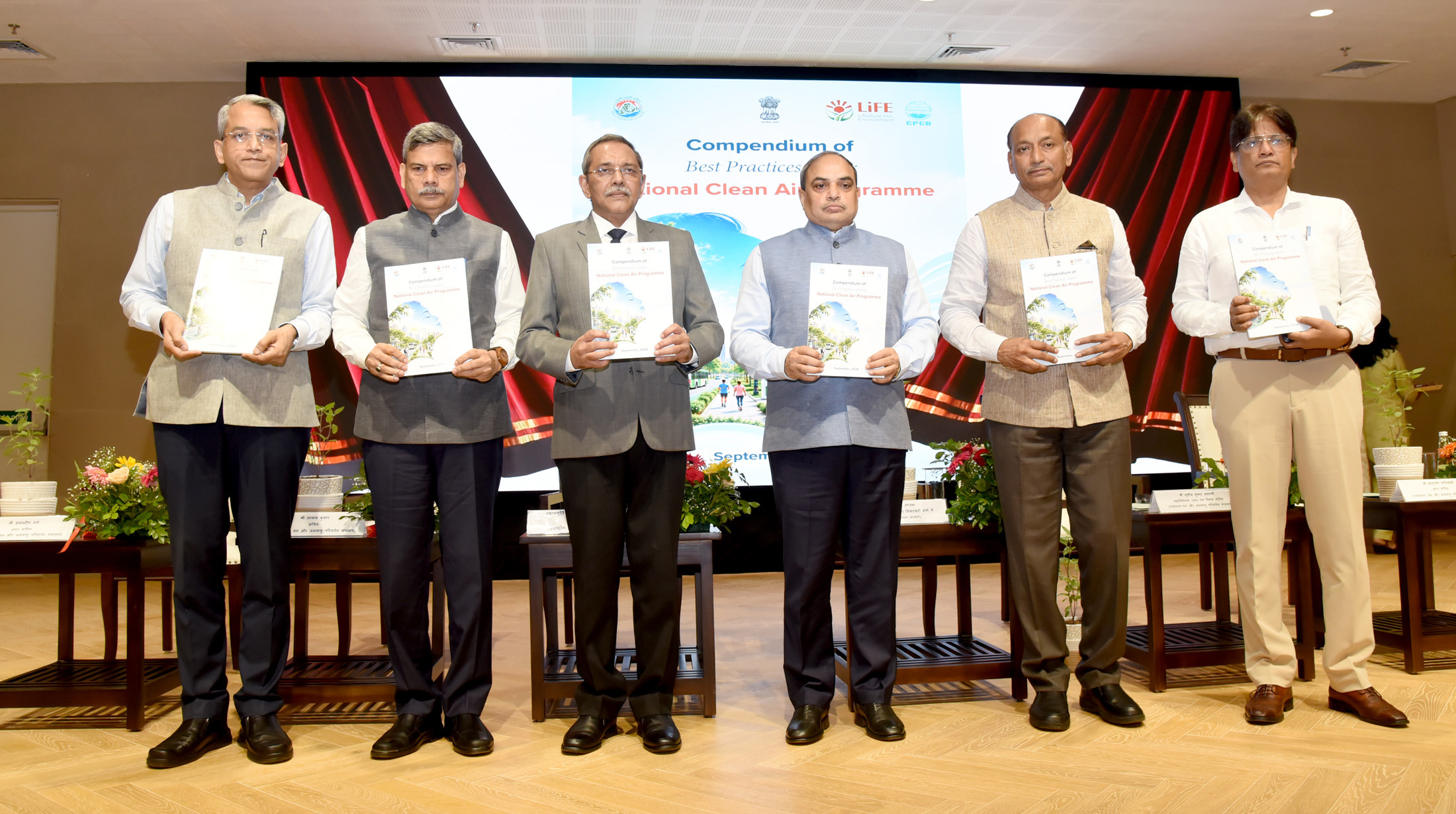
The Environment Ministry used Swachh Vayu Diwas 2026 to publish the latest progress under the National Clean Air Programme and to recognise cities through the fifth Swachh Vayu Sarvekshan. All 130 NCAP cities participated in the assessment, which included self-assessment, state-level approval, CPCB evaluation and field verification before the best-performing cities were selected.
The government said 108 of the 130 cities recorded an improvement in PM10 levels in 2025-26 compared with the 2017-18 baseline. It also said ₹16,425 crore in performance-linked grants has been provided to NCAP cities as gap funding for pollution-control measures. NCAP is a city-focused programme that uses action plans covering sources such as road dust, vehicles, industries, waste burning and construction.
The number needs context. A fall in annual PM10 concentration is useful, but it does not by itself mean that a city meets national air-quality standards or that exposure to finer PM2.5 has fallen proportionately. Meteorology can also change pollution levels from year to year. The policy challenge is therefore not only target-setting, but credible emissions inventories, monitoring, enforcement, public transport, cleaner fuels and coordination across municipal and state boundaries.
For UPSC, this belongs in GS Paper III under environmental pollution and conservation, and also connects to urban governance in GS II. Prelims preparation should cover NCAP, CPCB, National Ambient Air Quality Standards and the distinction between PM10 and PM2.5. In Mains, use the 108-of-130 figure as a current example, while adding the caveat that improved concentration is not identical to safe air.