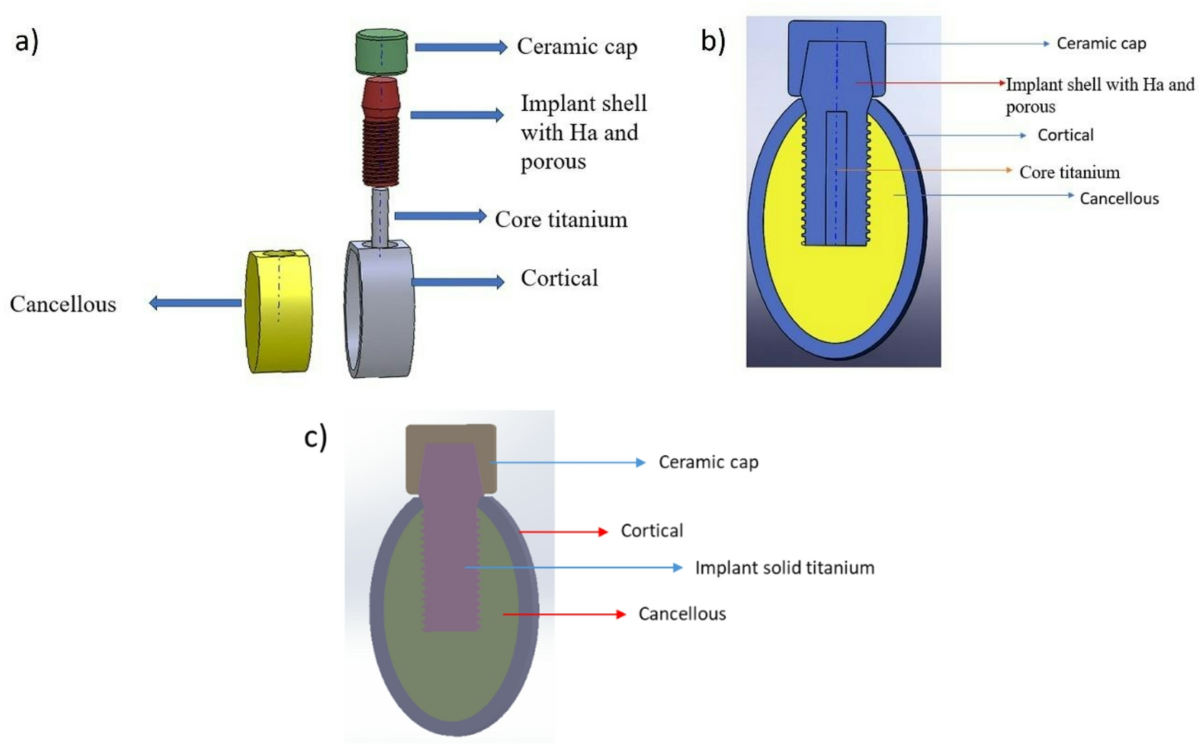
Indian researchers have built a single-piece bi-layer dental implant to reduce repeat surgery
The design combines titanium alloy and zirconia in an attempt to improve stability, durability and biocompatibility.
THE INDIQA Research Desk9 Sept 20262 minScience & Technology
60-Second Summary
The design combines titanium alloy and zirconia in an attempt to improve stability, durability and biocompatibility.
UPSC Relevance
PrelimsMedium
MainsGS-III · Low
SubjectScience & Technology, Health & Social Issues
TopicMaterials science and medical technology
Importance★★☆☆☆
Image: Scientific Reports / Springer Nature - research figure
Researchers have developed a bi-layered dental implant combining titanium alloy and zirconia in a single-piece structure. The approach is intended to reduce micromovement at component interfaces and simplify the number of surgical interventions needed compared with conventional multi-component implants.
The science link is materials engineering: titanium provides mechanical strength and biocompatibility, while zirconia offers useful surface and aesthetic properties. The work is a good example of how advanced materials research can translate into clinical-device design.
Prelims Lens
Prelims Lens
Titanium alloys are widely used in implants because of strength and biocompatibility.
Mains Lens
Mains Lens
Central issue: The design combines titanium alloy and zirconia in an attempt to improve stability, durability and biocompatibility.
Dimensions: Science & Technology · Health & Social Issues
India angle: The research illustrates the growing interface between Indian materials science and medical-device innovation.
Possible UPSC-style questionHow can materials engineering improve the safety and durability of biomedical implants?