Nepal’s flood rescue exposes the Himalayan risk to hydropower infrastructure
A glacier-driven flood damaged hydropower projects and trapped workers underground, turning climate risk into an infrastructure-resilience test.
THE INDIQA Research Desk8 Sept 20261 minEnvironment & Ecology
60-Second Summary
A glacier-driven flood damaged hydropower projects and trapped workers underground, turning climate risk into an infrastructure-resilience test.
UPSC Relevance
PrelimsHigh
MainsGS-I · GS-II · GS-III · High
SubjectEnvironment & Ecology, Disaster Management, Geography, International Relations & Geopolitics
TopicHimalayan hazards, GLOF risk and hydropower resilience
Importance★★★★☆
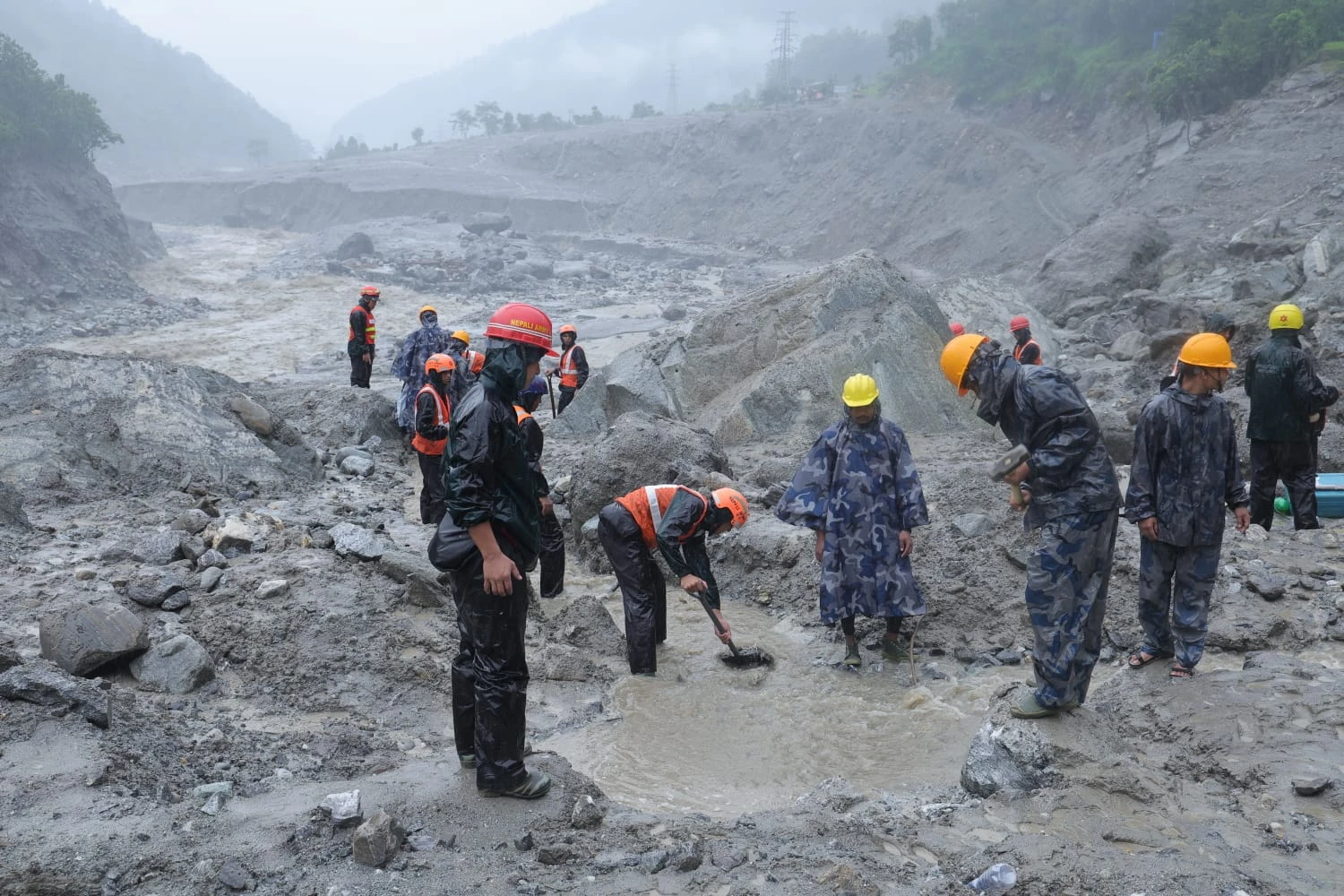
Image: Nepal Views / rescue operation photo
Rescuers in Nepal are concentrating on workers believed to be trapped in tunnels at hydropower projects after the August 26 glacier-induced flood along the Nepal-China border. Reuters reported that at least 11 hydropower projects were affected, with operations focused on Chilime and the Upper Trishuli 3A and 3B tunnel systems. About 121 missing workers were believed to be inside tunnels.
The disaster shows how Himalayan infrastructure faces cascading hazards: glacier or rock-ice failure can trigger debris flows, damage roads and bridges, cut power infrastructure and make rescue access difficult at the same time. Hydropower planning therefore depends not only on generation potential but also on geological risk, early warning and resilient design.
UPSC relevance: GS I geography; GS III environment, disaster management and infrastructure; GS II neighbourhood relations. Himalayan river systems make disaster risk inherently transboundary.
Prelims Lens
Prelims Lens
Rescuers in Nepal are concentrating on workers believed to be trapped in tunnels at hydropower projects after the August 26 glacier-induced flood along the Nepal-China border.
Reuters reported that at least 11 hydropower projects were affected, with operations focused on Chilime and the Upper Trishuli 3A and 3B tunnel systems.
About 121 missing workers were believed to be inside tunnels.
The disaster shows how Himalayan infrastructure faces cascading hazards: glacier or rock-ice failure can trigger debris flows, damage roads and bridges, cut power infrastructure and make rescue access difficult at the same time.
Mains Lens
Mains Lens
Central issue: A glacier-driven flood damaged hydropower projects and trapped workers underground, turning climate risk into an infrastructure-resilience test.
Possible UPSC-style questionDiscuss the key Environment & Ecology issues raised by “Nepal’s flood rescue exposes the Himalayan risk to hydropower infrastructure”.