
Defence procurement worth ₹1.10 lakh crore puts indigenisation back at the centre
About 98% of the proposals cleared in principle are expected to be sourced from Indian industry, linking military modernisation with defence manufacturing policy.
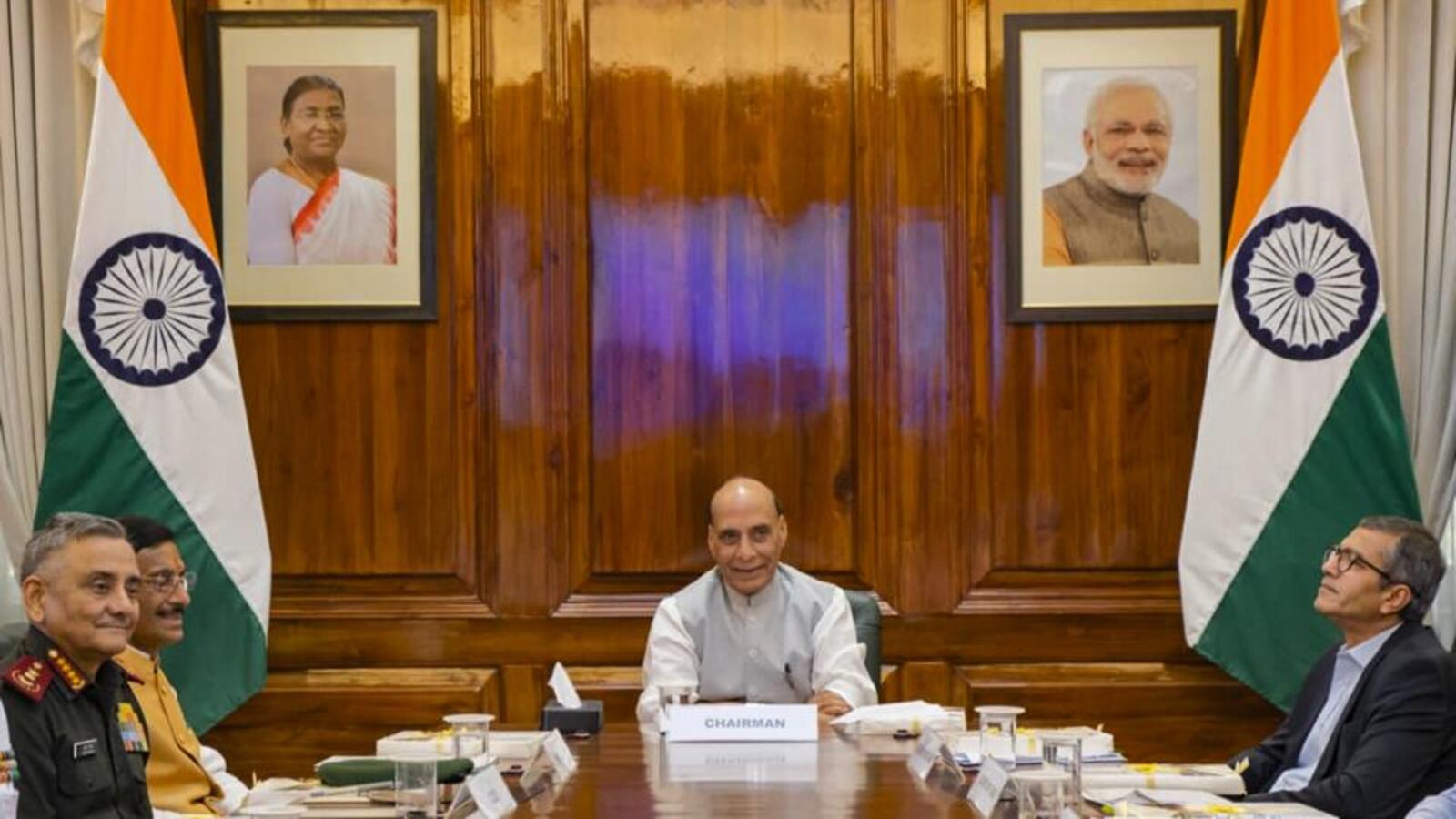
The Defence Acquisition Council, chaired by Defence Minister Rajnath Singh, granted Acceptance of Necessity to acquisition proposals estimated at about ₹1.10 lakh crore on September 7. Acceptance of Necessity is the in-principle administrative approval that allows a procurement proposal to move further through India’s defence acquisition process; it is not the same as a final contract award.
For the Army, the approved proposals include Chemical, Biological, Radiological and Nuclear reconnaissance vehicles, high-mobility vehicles, self-propelled mechanical mine layers, Advanced Light Helicopters, trawl tanks and the Sarvatra Bridge System. The government said the CBRN vehicles are intended to detect, identify and mark contaminated areas, while other platforms are aimed at mobility, logistics, engineering support and battlefield survivability.
The policy signal is as important as the equipment list. The Defence Ministry said roughly 98% of the procurements covered by the approvals will be sourced from Indian industry. That fits the wider push toward domestic defence manufacturing, import substitution, private-sector participation and a larger Indian defence industrial base. The real test, however, comes later: contracting, delivery schedules, indigenous content, technology depth and life-cycle support.
For UPSC, connect this development to GS Paper III themes of security, defence technology, indigenisation and the defence-industrial ecosystem. For Prelims, remember the DAC’s role in capital acquisition decisions and the meaning of Acceptance of Necessity. For Mains, a balanced answer should distinguish higher domestic procurement from genuine technological self-reliance: local assembly and local design capability are not automatically the same thing.